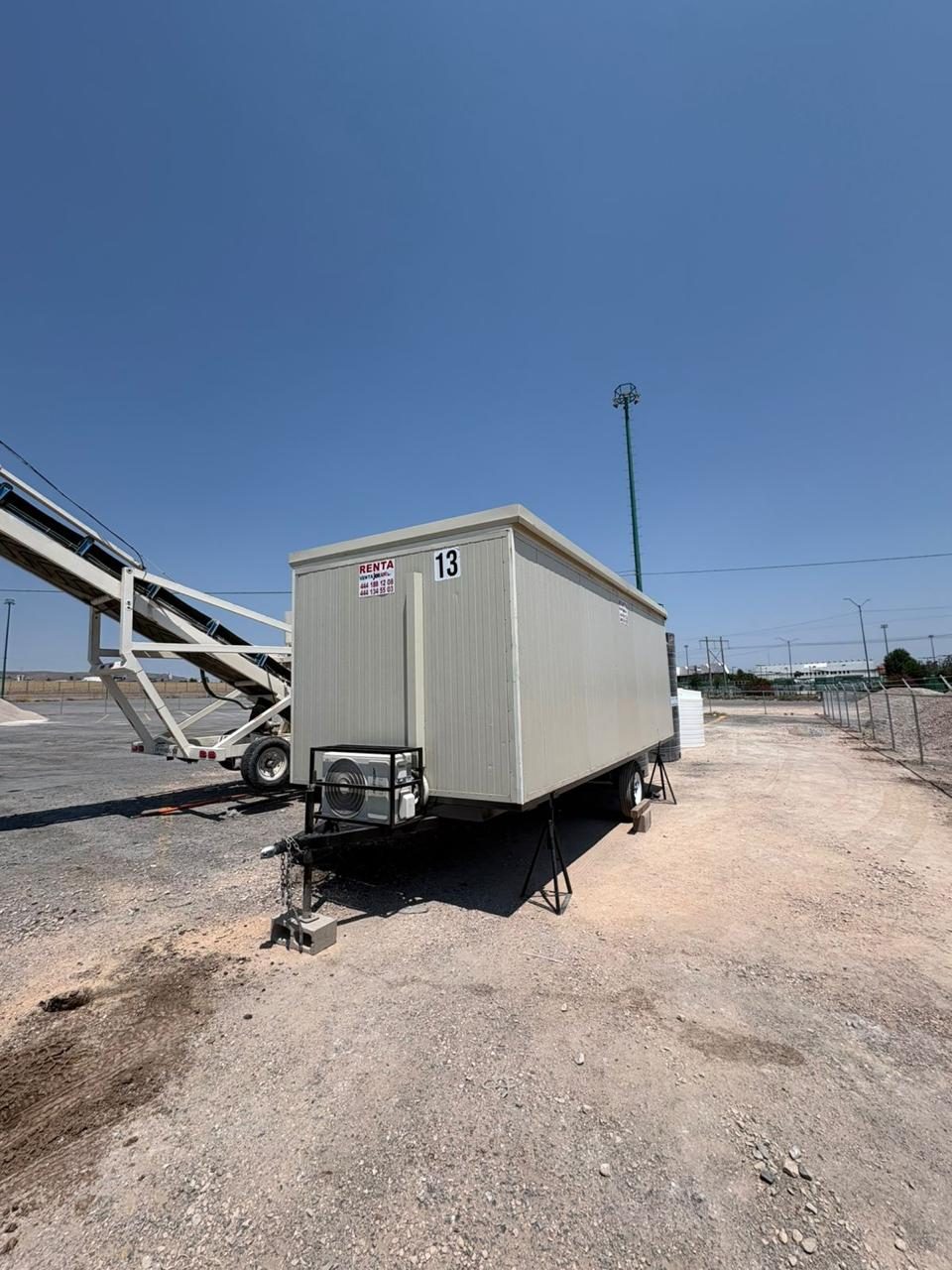
How the mobile office reached the site
From improvised block hut to climate controlled module: how the mobile office became standard equipment on Mexican construction sites and what drove the shift.
Twenty years ago the site office in Mexico was almost always the same thing: a block room built in a corner of the lot, or a house rented two streets away. Today it is rare to arrive at a formal project and not find at least one levelled metal module with stairs and air conditioning. The change was not driven by fashion.
What came before
Improvised construction carried three problems the industry tolerated for a long time:
It was built and then demolished. The site hut consumed material, labour and the foreman’s time, and at the end of the project it had to be torn down and the rubble hauled away. That was cost that landed nowhere.
It could not be moved. When the work sequence called for clearing that corner of the lot, the office was in the way. It was often demolished mid project only to be rebuilt somewhere else.
It protected neither documents nor people. With no insulation, a sheet metal or block room in the Bajío goes from 15 degrees in the morning to over 35 by midday. Drawings deteriorate, computers overheat and nobody performs the same.
What changed
Several things converged at more or less the same time.
Industrial investment arrived in central Mexico. The Bajío industrial parks brought projects with corporate standards, where the client audits the site and expects to see decent facilities for administrative staff. An improvised hut stops being acceptable when the person signing the contract comes to inspect.
Projects got shorter and more numerous. A contractor used to run two large jobs a year; now they might run six mid sized ones at once. Building six site huts and demolishing them stops making sense when the alternative is moving the same module.
Health and safety became a requirement. Audits started reviewing conditions in the administrative area, not just at the work face. Ventilation, lighting, exits and climate control became verifiable items.
The site engineer role professionalised. Qualified technical staff have options about where they work. Offering an office with climate control and real desk space is part of retaining people.
Why the trailer format won in Mexico
Other markets are dominated by stackable container type modules that need a crane to position. In Mexico the chassis mounted unit with swivel jack and leveling towers took over, and the reason is practical: it does not depend on a crane lift.
A chassis mounted unit arrives towed by a truck, positions on the jack, levels on its towers and is operating the same day. No crane to schedule, no street to close, no lifting window to wait for. On urban sites and in industrial parks with constant traffic, that outweighs every other advantage.
The standard that settled in
Over the years the market converged on a fairly stable configuration: 2.40 metres wide, between 6 and 10 metres long, double wall insulated panel, mini split, and access by staircase with handrail.
That 2.40 metre width is no accident. It is the maximum that travels federal highways without an oversize permit, and that is where the 8x24 size came from, today the most requested in the country. We cover this in detail in why the 8x24 is the right size.
Where the industry stands now
The mobile office stopped being a differentiator and became the baseline. What separates suppliers today is not having units, but:
- Delivery speed. A project that is starting cannot wait three weeks. At JORAM we deliver within 48 hours of signature and confirmed payment.
- In house manufacturing. Whoever builds controls the timeline and the price. Whoever resells depends on someone else.
- Ability to customize. More clients are asking for specific layouts, particular electrical installations, or units with integrated sanitary facilities.
- Local response. A supplier with a workshop in the region resolves a fault in hours, not days.
What is coming
The requests that have grown most over the past couple of years are units with an integrated bathroom, units with higher electrical capacity for computing and monitoring equipment, and rest modules for crews on remote sites. The mobile office is starting to cover the whole temporary facilities front rather than just office space.
JORAM has been building from San Luis Potosí for the Bajío and Central Mexico for more than fifteen years. To see the units we currently offer, browse the full catalog or message us on WhatsApp.
Ready to get a quote for your mobile office?
We reply within 24 hours with a detailed proposal built around your needs.
 Request a quote
Related Articles
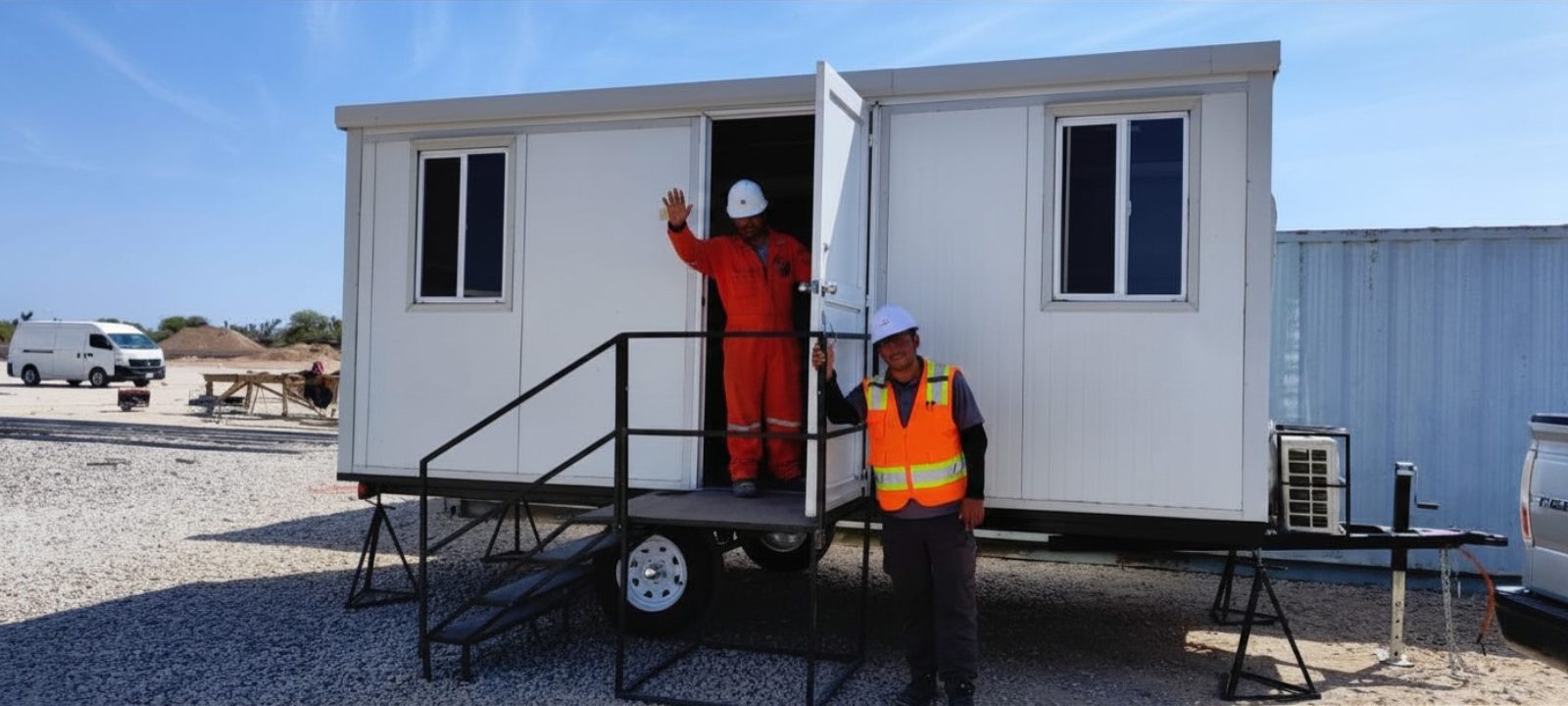
The Ergonomic Advantages of a Mobile Office on a Construction Site
How a well-designed mobile office reduces fatigue, improves focus, and protects the health of your administrative team on-site.
Read more →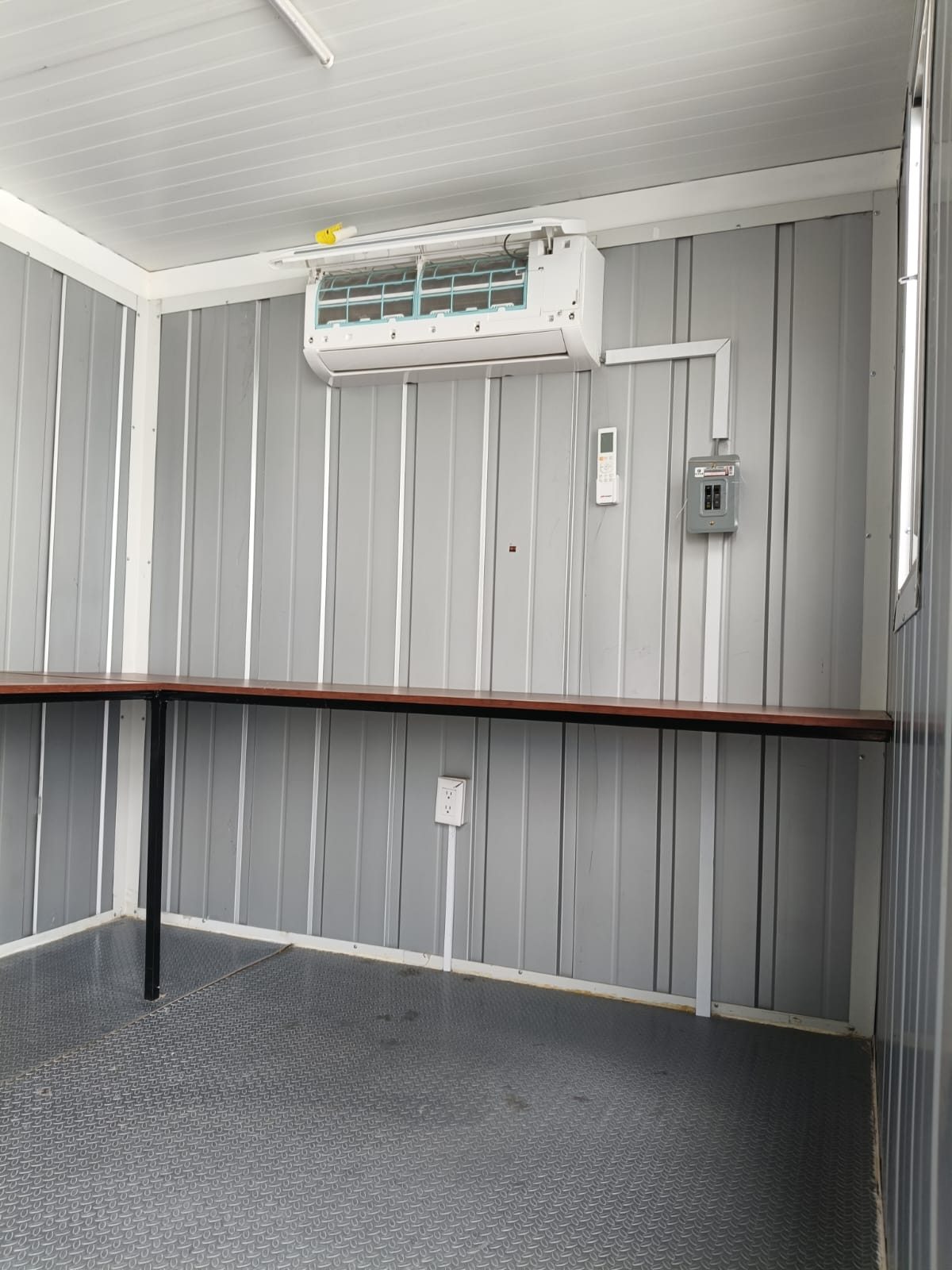
Mobile office with a toilet: quick guide
What to check before renting a mobile office with an integrated toilet: sanitary type, tank capacity, discharge, installation and the costs that rarely make it into the quote.
Read more →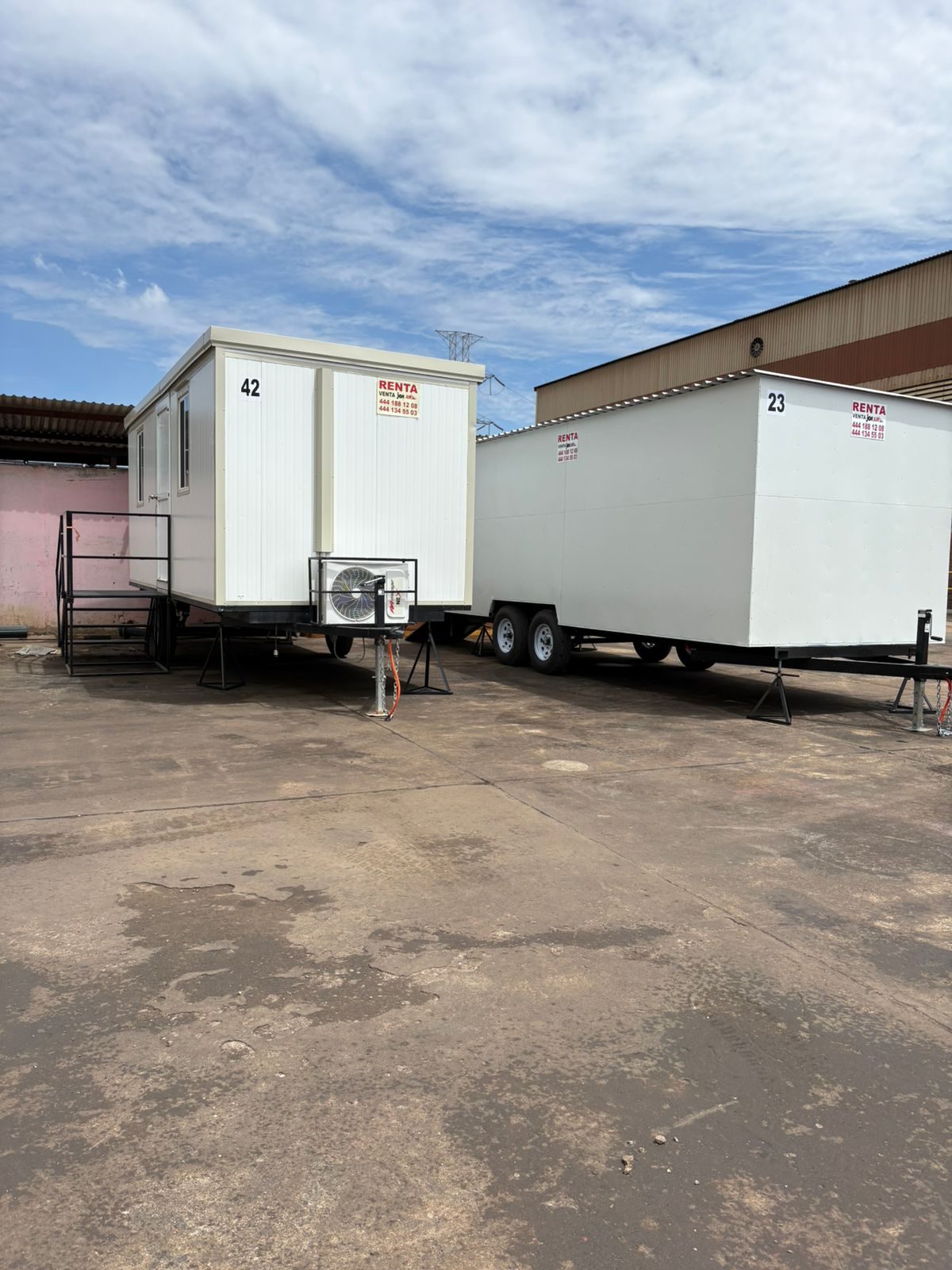
Rent or buy: which one fits you?
A practical comparison of renting versus buying an 8x24 mobile office: cost, timelines, maintenance and which option makes sense for each type of project.
Read more →