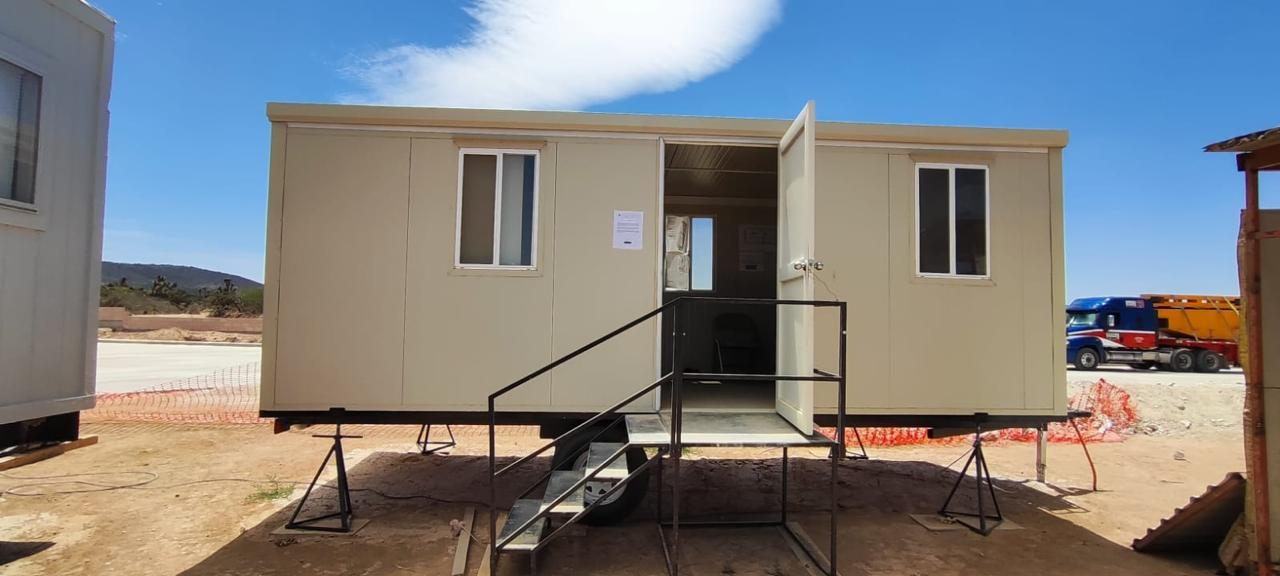
Storage container: when is it worth it?
What a trailer type storage container is for on a construction site: what goes inside, why it beats an improvised material hut, and when it is not the right call.
Tool and material theft is one of those costs that rarely shows up in the budget but always shows up in the final margin. A trailer type storage container exists for exactly that: giving you a closed, movable, lockable point where expensive material stops being in plain sight.
What it actually is
It is a storage unit mounted on a steel chassis, built on the same structural base as our mobile offices but configured for cargo rather than administrative work. It arrives towed by a truck, positions on a swivel jack, levels on its towers and is operating the same day.
The key difference from a conventional shipping container is that you do not need a crane to place or remove it.
What normally goes inside
In practice, four categories:
Power and measuring tools. Rotary hammers, laser levels, total stations, portable generators. This is what gets stolen first because it is what resells fastest.
Weather sensitive material. Cement bags, adhesives, sealants, paint, plaster. Material that is a total loss once it gets wet.
Finishes awaiting installation. Flooring, glazing, light fittings, bathroom fixtures. They arrive before the work face is ready and have to wait somewhere without getting damaged.
Safety equipment. Harnesses, extinguishers, signage, replacement PPE. Things you need to find quickly and in good condition.
Why it beats the improvised material hut
We have written about how Mexican construction moved past temporary structures in how the mobile office reached the site, and storage followed the same path for similar reasons:
It consumes no material or labour. A block hut gets built, used for a few months and demolished. That is wages, material and debris removal that land in no deliverable.
It can be moved. When the work sequence calls for clearing that part of the lot, the store relocates in one manoeuvre instead of being demolished.
It actually locks. A steel structure with a metal door and a padlock is a different level of deterrence than a wooden door with a hasp.
It protects from weather. Insulated panel prevents the condensation that ruins cement and adhesives, which an unlined sheet metal hut does not.
It frees up working space. If you were using a corner of the mobile office to store material, you get that floor area back for what it was meant for.
When it is not the right call
To be fair, there are cases where we do not recommend it:
- Very large volumes of bulk material. Sand, gravel and rebar are handled in the open with different controls.
- Projects under two months with no expensive material on site. There the freight cost outweighs the benefit.
- When you need to work inside. If you are setting up a workshop with people in it permanently, an office configured unit with climate control and ventilation is the better fit.
- When you already have a warehouse on the property. Obvious, but it happens.
How to size what you need
A practical rule that works well: count how many active work fronts you will have running at once. A typical finishes front moves between 8 and 12 cubic metres of stored material at any given moment.
If in doubt, one unit too many beats one too few. A saturated store forces you to take material out and leave it outside, which loses you exactly the benefit you contracted it for.
What to ask before contracting
- Whether the rental includes delivery and collection freight. Those are two movements, not one.
- How you get in. Floor height relative to the ground matters when you are moving heavy material in and out daily.
- Whether it has interior lighting. With no light, a closed store is unusable after six in the evening.
- Whether relocation within the site carries a cost. It almost always does, and it is worth knowing beforehand.
- What happens if you need to extend. Projects run long.
Reference cost
Our trailer type storage container starts from 6,500 MXN per month, delivered within 48 hours of signature and confirmed payment. For perspective, that is roughly what it costs to replace one good brand rotary hammer and a laser level.
If you want help sizing how many units your project needs, message us on WhatsApp with the project type and estimated duration.
Ready to get a quote for your mobile office?
We reply within 24 hours with a detailed proposal built around your needs.
 Request a quote
Related Articles
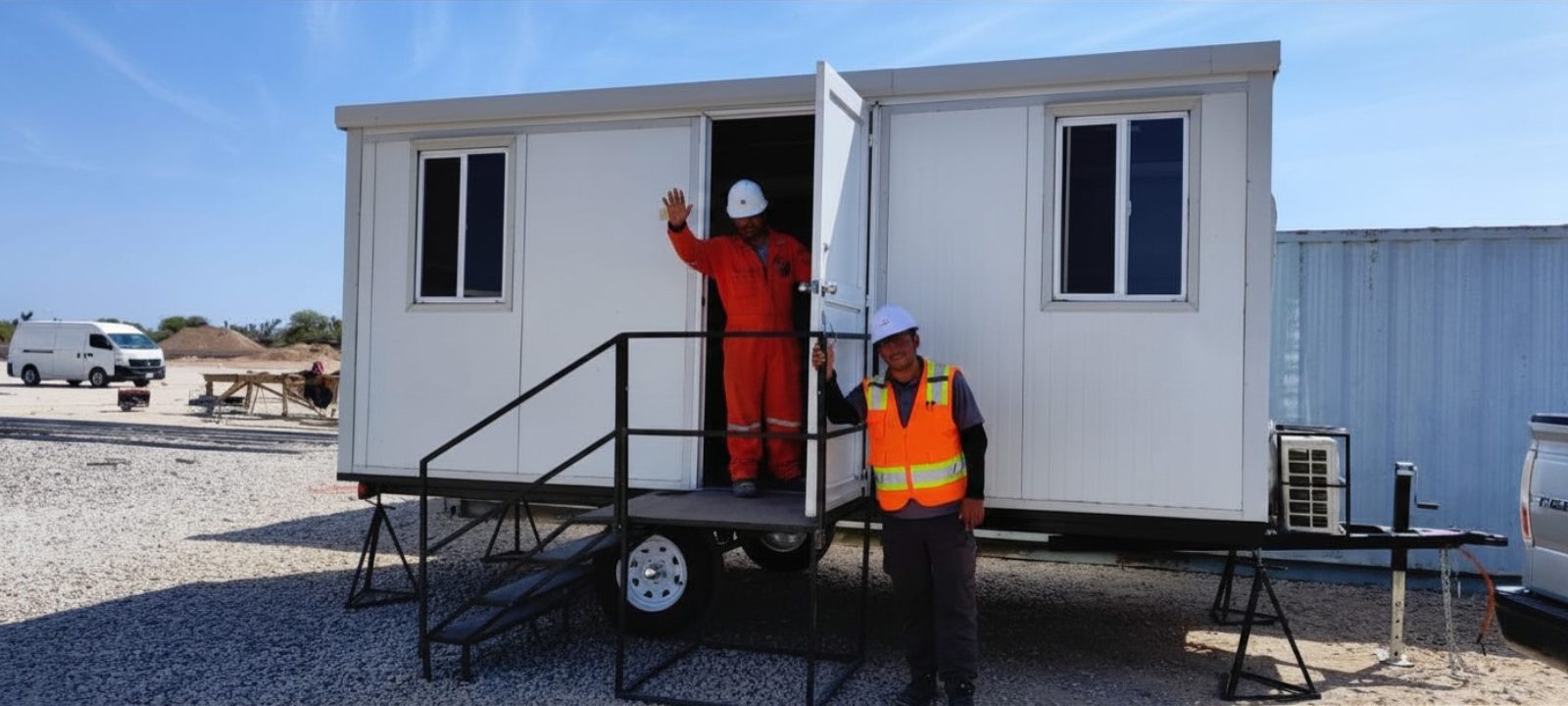
The Ergonomic Advantages of a Mobile Office on a Construction Site
How a well-designed mobile office reduces fatigue, improves focus, and protects the health of your administrative team on-site.
Read more →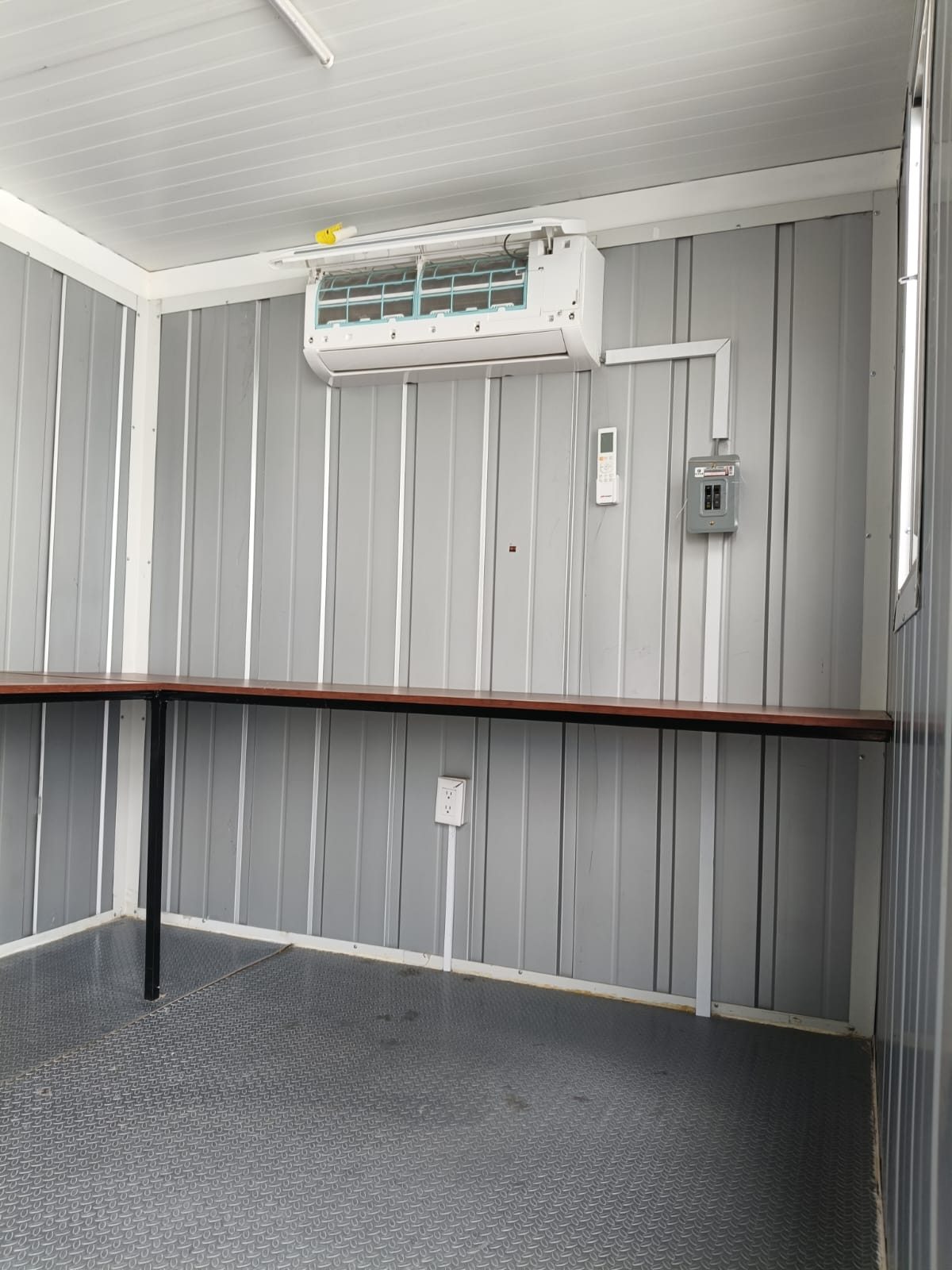
Mobile office with a toilet: quick guide
What to check before renting a mobile office with an integrated toilet: sanitary type, tank capacity, discharge, installation and the costs that rarely make it into the quote.
Read more →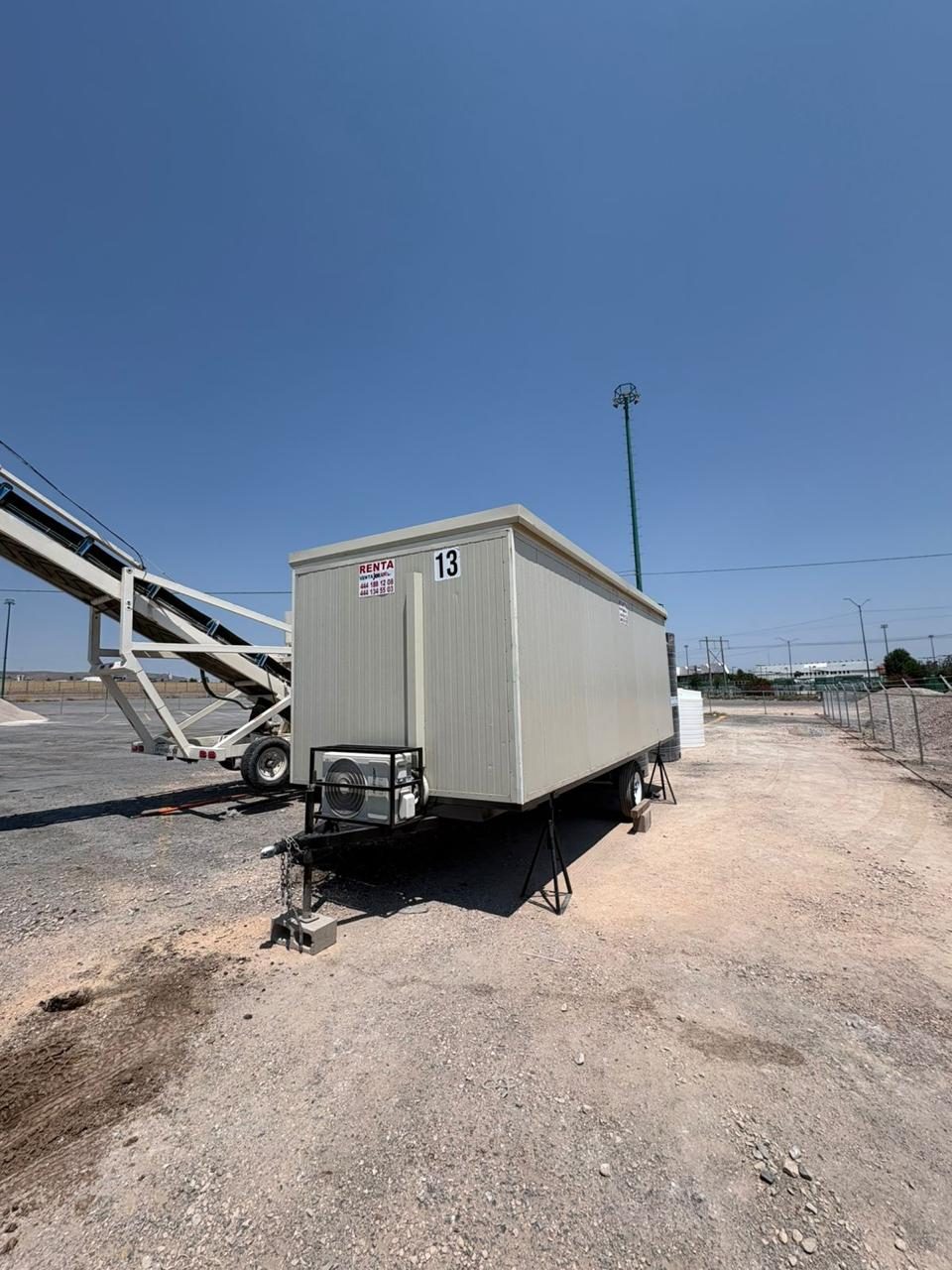
How the mobile office reached the site
From improvised block hut to climate controlled module: how the mobile office became standard equipment on Mexican construction sites and what drove the shift.
Read more →